
You know that feeling when you toss an old t-shirt in the trash and it just... disappears? Like, the garbage truck takes it and poof, it's gone from your life forever?
Yeah, that's not how it works. And honestly? What actually happens is kind of heartbreaking.
That shirt you wore twice and didn't like? It's going to outlive you. Seriously. It'll still be sitting in a landfill long after you're gone, slowly breaking down into toxic pieces that poison the soil and water.
Heavy, right? But you need to know this. Because once you understand where your clothes really go, you'll never look at your closet the same way again.
The Journey Nobody Talks About
Let's follow that t-shirt you just threw away and see where it actually ends up.
Stop 1: Your Trash Bin
You toss it in. Maybe you feel a little guilty, but it's worn out or stained or you just don't like it anymore. Whatever. It's gone from your room, so problem solved, right?
Wrong. The journey is just beginning.
Stop 2: The Garbage Truck
Your shirt gets compressed with food waste, plastic bottles, dirty diapers, and whatever else your neighborhood threw out. It's all mixed together now, soaking in whatever liquids are in there. Gross, but that's the least of its problems.
Stop 3: The Landfill
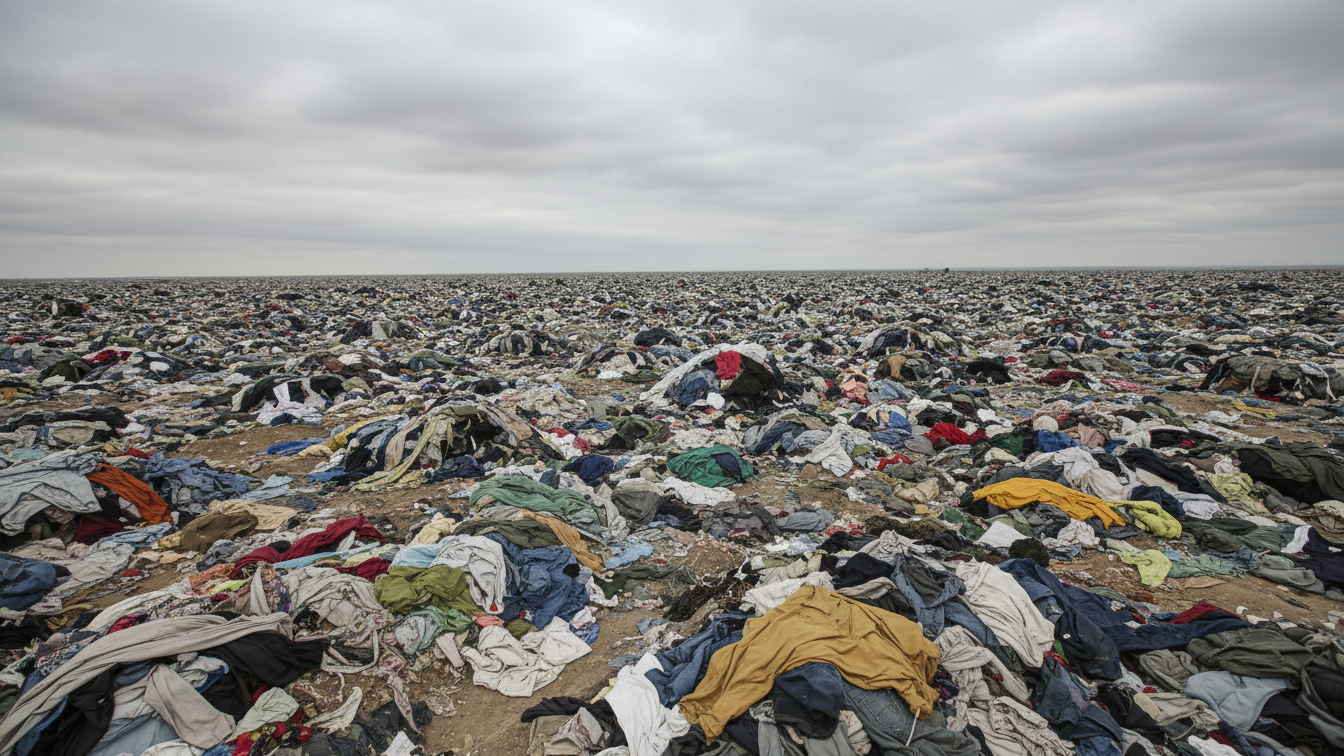
This is where things get real. Your shirt gets dumped into a massive pit with millions of tons of other garbage. It gets buried under layers and layers of trash. And there it sits. For decades. Maybe centuries.
Most people think clothes just decompose like an apple core. They don't.
Why Clothes Don't Just "Disappear"
Here's what actually happens in a landfill, and why your old clothes are basically immortal:
Synthetic fabrics (polyester, nylon, acrylic): These are basically plastic. They can take 200+ years to break down. That Forever 21 top you bought for $8? It's literally named correctly, it'll be around forever.
Cotton and natural fabrics: These should decompose, right? In theory, yes. But in landfills, there's barely any oxygen. Without oxygen, even natural materials break down super slowly and release methane, a greenhouse gas that's way worse for climate change than CO2.
Dyed fabrics: Those pretty colors? They're usually made with chemicals that leak into the ground as the fabric slowly breaks apart. These toxins can seep into groundwater that people drink.
Blended fabrics: Most clothes are mixed materials (like cotton-polyester blends). These are even harder to break down because you can't separate the natural from the synthetic.
So that pile of clothes you've thrown away over your lifetime? It's all still out there, sitting in landfills, creating a toxic legacy that'll outlast your grandkids.
Feeling it yet? Because this is just the landfill route. Let's talk about what happens when you try to do the "right thing."
When You Donate Instead (The Truth Nobody Mentions)
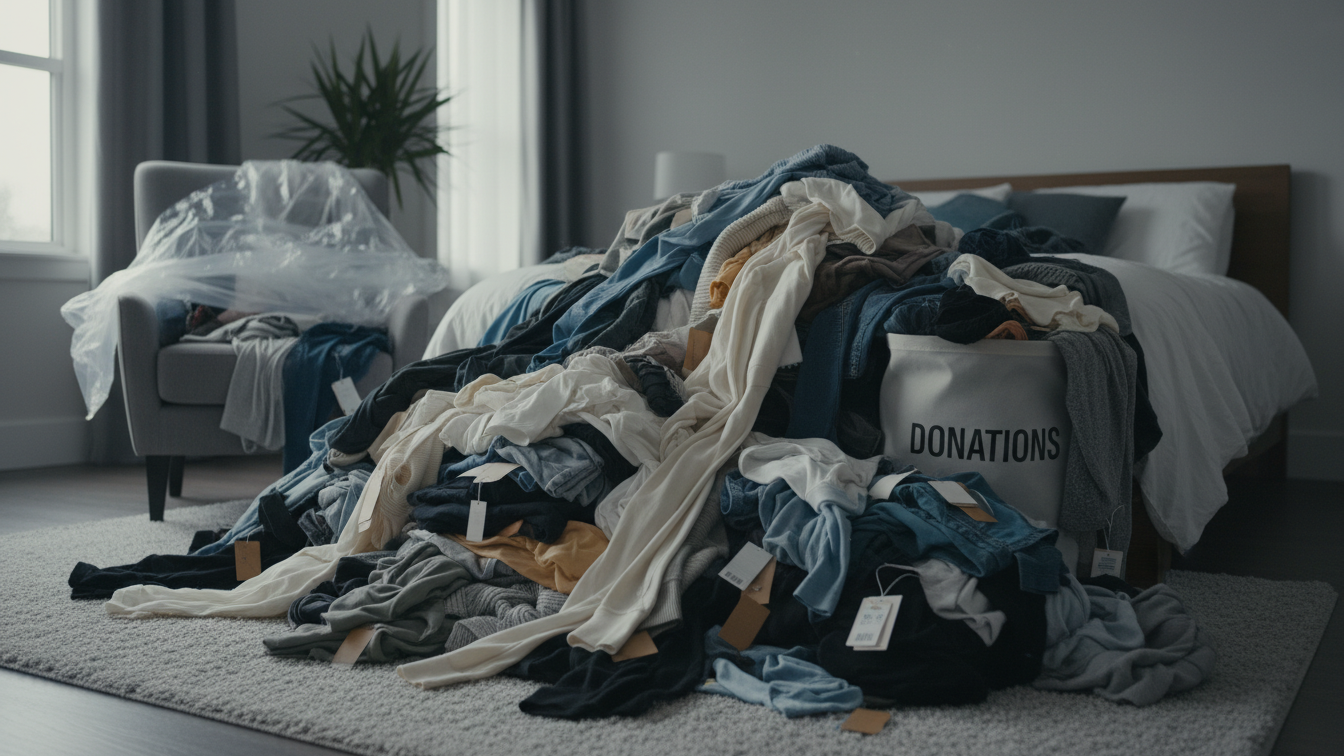
Okay, so you're smarter than throwing clothes in the trash. You donate them to Goodwill or put them in those charity bins. Problem solved! You're a good person!
I hate to break it to you, but it's not that simple.
Here's what actually happens to donated clothes:
Only 10-20% get sold in the thrift store where you donated them. The rest? They go on a whole other journey.
What doesn't sell gets sorted: Workers go through mountains of donations, separating the "good enough to sell elsewhere" from the "total trash."
The "good" stuff gets shipped overseas: We're talking massive bales of used clothing shipped to countries in Africa, Asia, and Latin America. Millions of tons every year.
And here's where it gets complicated and kind of messed up...
The Global Secondhand Clothing Trade (It's Not What You Think)
Those clothes you donated with good intentions? They flood markets in developing countries, and the impact is really mixed.
The good part: People in these countries can afford clothes they couldn't otherwise. A used pair of jeans for $2 beats a new pair for $50 when you're living on $3 a day.
The heartbreaking part: This flood of cheap secondhand clothes has destroyed local textile industries in many countries. Why would someone buy locally-made clothes when they can get American or European cast-offs for a fraction of the price?
Entire industries have collapsed. Jobs lost. Traditional fabric-making skills disappearing.
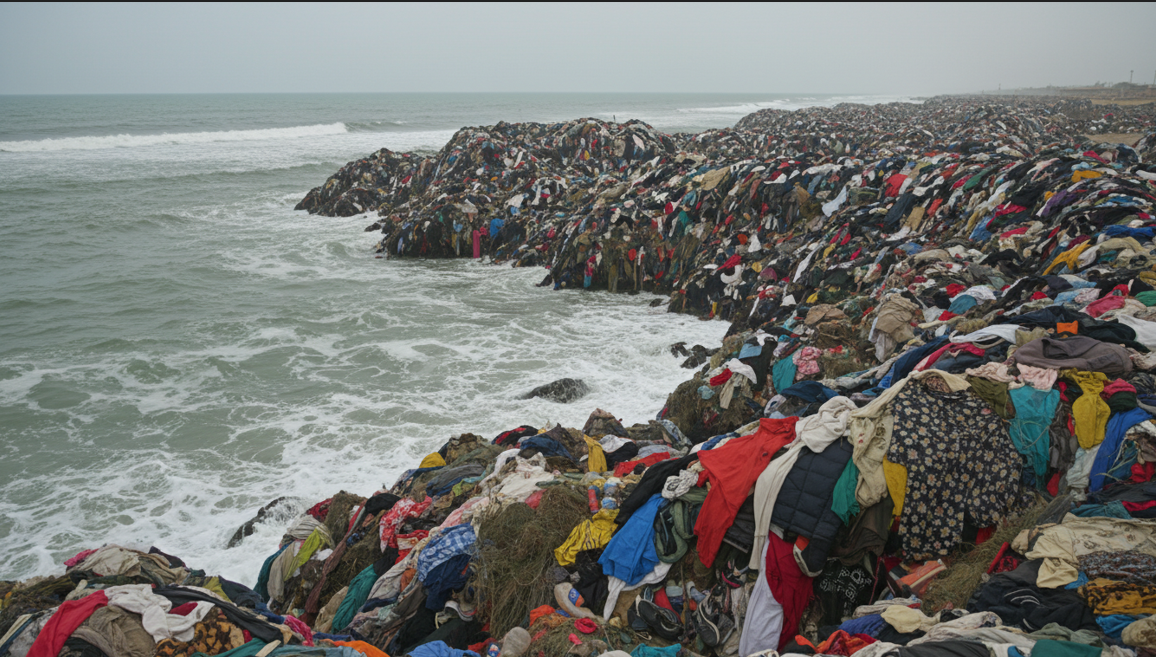
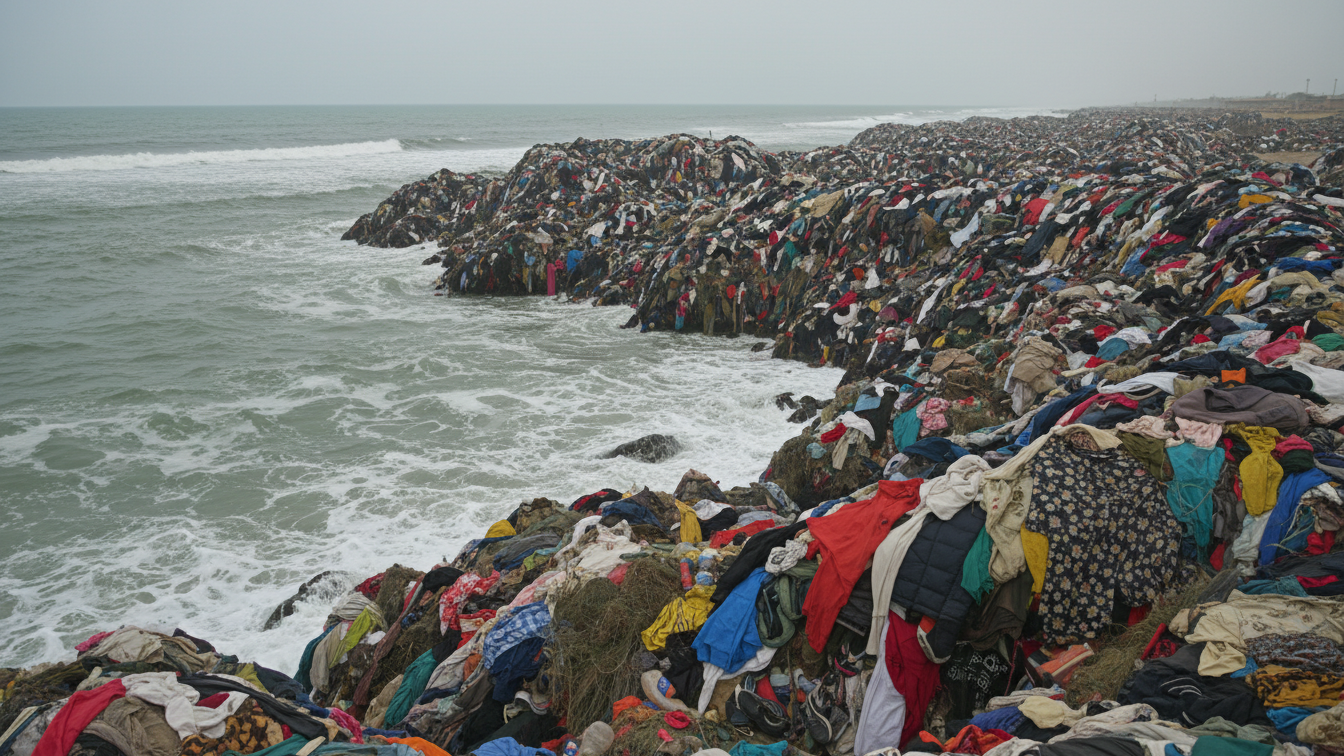
In Ghana, they have a beach called "Dead White Man's Clothes" because it's literally covered in discarded clothing that washes up from the secondhand markets. Mountains of unwanted donations that even the secondhand market can't absorb.
And here's the kicker: About 40% of the clothes shipped overseas still end up in landfills or burned. Just in a different country.
So your donation helped, but it also contributed to a massive waste problem that rich countries exported to poor countries. Feel that emotional weight? You should.
What This Means for You
I know this is heavy. I know it feels overwhelming and maybe even hopeless.
But feeling hopeless is exactly what keeps the problem going. The fashion industry is counting on you to feel too small to make a difference, to just keep buying and throwing away because "what's the point?"
Here's the point: You have more power than you think.
Every time you choose to keep wearing something instead of tossing it, you're keeping it out of a landfill for a bit longer.
Every time you repair something instead of replacing it, you're breaking the cycle.
Every time you buy secondhand or swap with friends, you're not creating new demand for new production.
Every time you refuse to buy something you don't really need, you're voting against the whole broken system.
What You Can Actually Do
Wear what you own until it's truly done: And I mean DONE. Holes that can't be patched. Stains that won't come out. Fabric falling apart. Not just "I'm bored of it."
Learn basic repairs: Sewing a button back on takes 5 minutes. YouTube has tutorials for fixing almost anything.
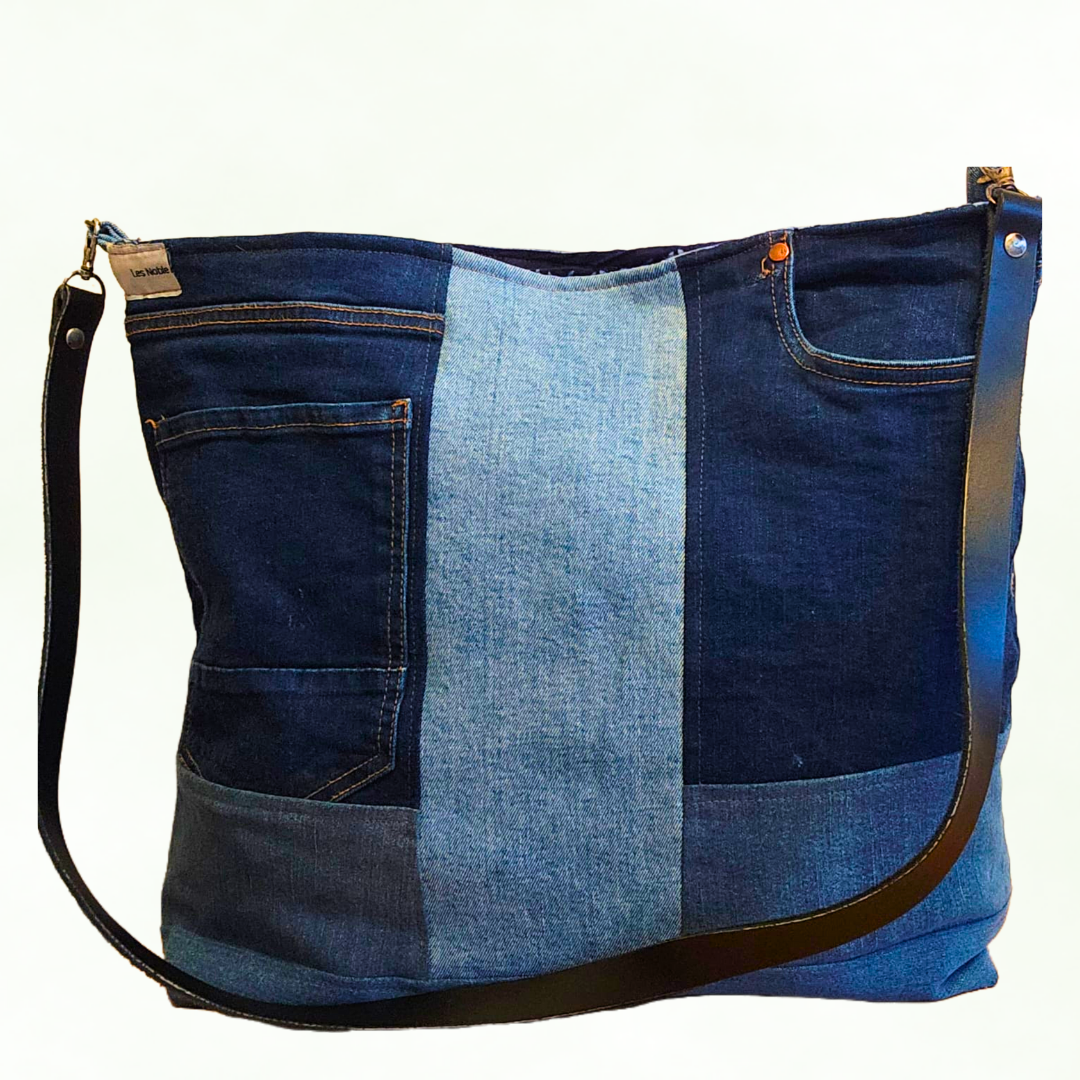
Get creative with old clothes: Cut jeans into shorts. Turn t-shirts into cleaning rags. Make a quilt from old clothes with memories.
Sell or swap instead of donate: Apps like Depop, Poshmark, or local swap groups mean your clothes go directly to someone who wants them, not into the donation pile that might end up overseas.
If you do donate, be selective: Only donate things that are actually wearable. Stained, ripped, or worn-out clothes just burden the system. Those should go to textile recycling if available.
Support brands with take-back programs: Some companies (like Patagonia, H&M, Levi's) will take back old clothes and attempt to recycle them properly. It's not perfect, but it's better than the trash.
Buy less in the first place: This is the big one. The most sustainable garment is the one that's never produced.
The Future of Our Clothes
Here's the thing that keeps me up at night: everything you've ever thrown away still exists somewhere.
Every t-shirt from middle school. Every pair of jeans that didn't fit right. Every trendy piece you wore once. All of it, somewhere on this planet, sitting in a pile or buried in the ground or floating in the ocean.
And it'll all be here long after we're gone.
Unless we change. Like, fundamentally change how we think about clothes.
We need to stop seeing clothes as disposable. They're not meant to be used for a few months and tossed. They're resources, materials that took water, energy, labor, and often caused pollution to create.
When you throw away a t-shirt, you're not just throwing away fabric. You're throwing away the 2,700 liters of water it took to grow the cotton. The energy used to manufacture it. The labor of the person who sewed it. The fuel used to ship it to you.
All of that, just... wasted.
A Different Ending Is Possible
I don't want to leave you feeling depressed. I want to leave you feeling fired up.
Because here's the truth: your generation is the one that can fix this.
You're growing up seeing the consequences of overconsumption firsthand. You're inheriting a planet that's struggling under the weight of waste literal waste and wasted resources.
But you're also the generation asking questions, demanding transparency, refusing to accept "that's just how things are."
When you keep that shirt an extra year instead of tossing it, you matter.
When you convince your friend to shop secondhand with you, you matter.
When you call out brands for their wasteful practices, you matter.
The fashion industry won't change because companies suddenly grow a conscience. It'll change because millions of people like you decide they're done being part of the problem.
Every single choice adds up. Every garment you keep out of the landfill is a small victory.
And yeah, we need bigger systemic changes too, laws requiring brands to deal with their waste, better recycling technology, regulations on overproduction. But that change starts with people caring enough to demand it.
So the next time you're about to throw away a piece of clothing, pause.
Really think about where it's going.
Picture it sitting in a landfill for the next 200 years. Picture it shipped overseas to a country already drowning in our castoffs. Picture it being burned, releasing toxins into someone's air.
Feel that? That discomfort? That's your conscience telling you there's a better way.
Listen to it.
Your clothes don't have to end up as someone else's pollution. You get to decide what happens to them.
Choose differently. Because the planet is literally counting on you.
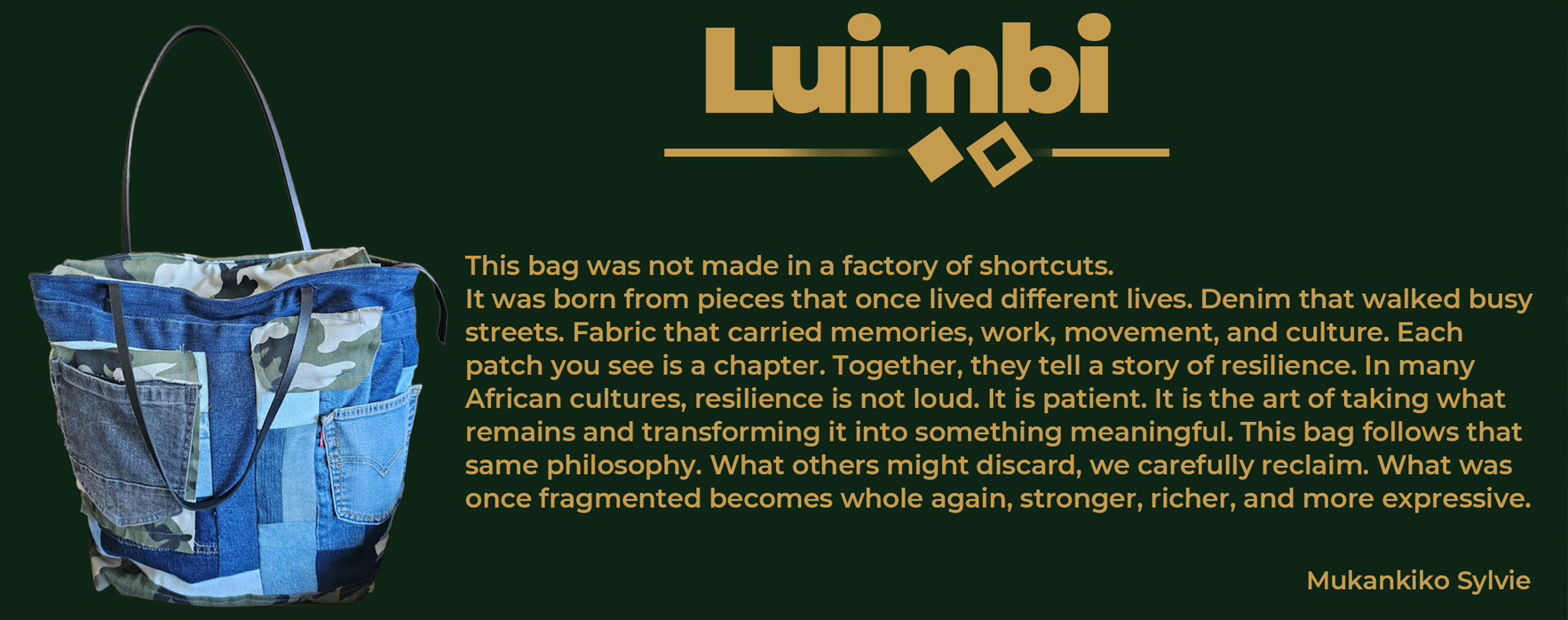
Loving our planet to the level that you can protect and fight for it is a must to every human being on this planet. And at Mukasy Collections we believe that one of the best way to do so, is buying fashion pieces consciously
Comments