

When you buy a $10 dress from a massive fashion chain, here's what happens: the company's CEO gets richer, shareholders get dividends, and the person who actually made your dress gets maybe 50 cents. If they're lucky.
But when you buy from a small, conscious fashion brand? Your money tells a completely different story. And honestly, it's a much better one.
When you buy a $10 dress from a massive fashion chain, here's what happens: the company's CEO gets richer, shareholders get dividends, and the person who actually made your dress gets maybe 50 cents. If they're lucky.
But when you buy from a small, conscious fashion brand? Your money tells a completely different story. And honestly, it's a much better one.
But when you buy from a small, conscious fashion brand? Your money tells a completely different story. And honestly, it's a much better one.
Big fashion companies operate on volume. They need to sell millions of items to billions of people, which means cutting every possible corner. Workers become numbers on a spreadsheet. Quality becomes irrelevant because the item just needs to last until the next trend hits.
Small conscious brands flip this model completely.
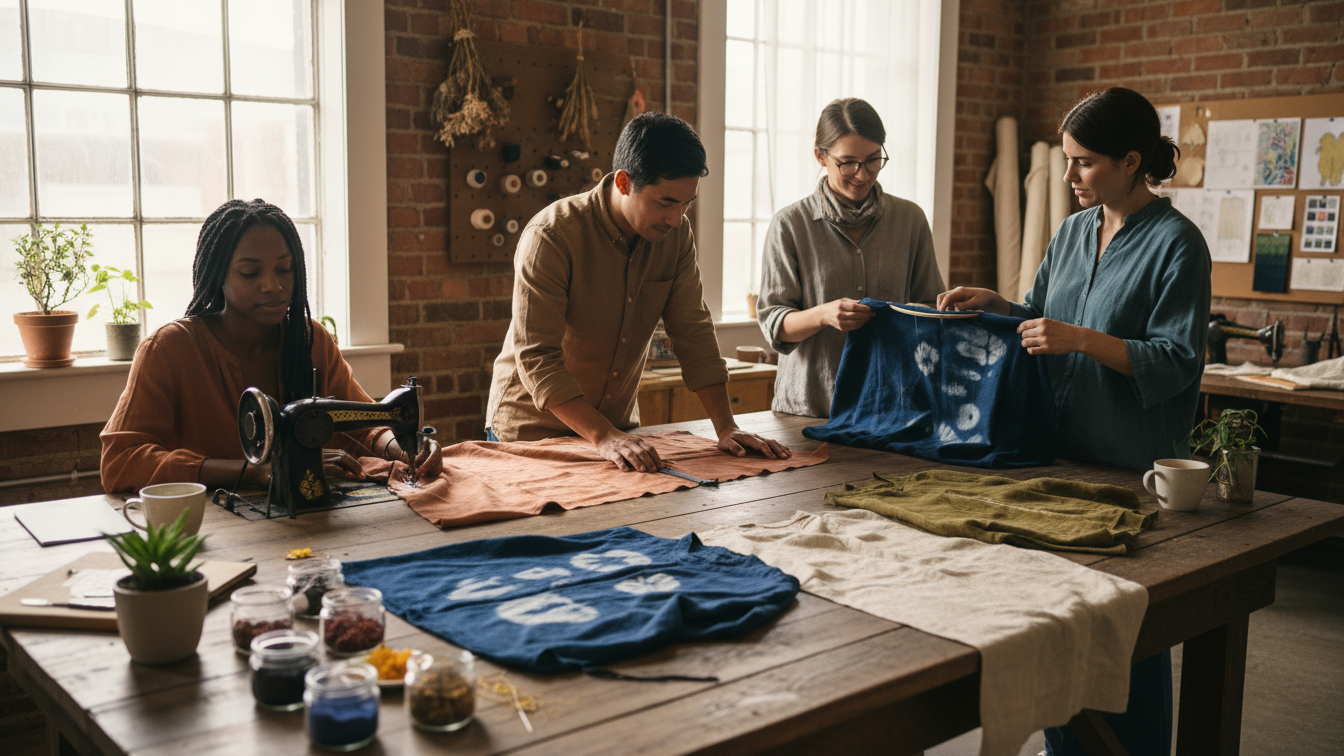
Instead of churning out thousands of identical pieces in a factory where workers are barely making minimum wage, they're often working directly with artisans, real people with names, families, and actual skills passed down through generations.
Think about it like this: buying from a huge corporation is like eating at a chain restaurant where everything's microwaved and identical. Buying from a small conscious brand is like eating at your neighbor's family restaurant where recipes have been perfected over decades and everyone knows the chef's name.
Who Are These Artisans Anyway?
Artisans aren't just random people making stuff. They're skilled craftspeople who've often spent years, sometimes their whole lives, perfecting techniques that machines can't replicate.
We're talking about:
Weavers in Guatemala who create intricate patterns on backstrap looms, a technique that's been used for over 2,000 years
Embroiderers in India who do hand-stitching so detailed it can take days to complete a single piece
Leather workers in Morocco who hand-dye and craft bags using methods that have been in their families for generations
Knitters in Peru who work with alpaca wool, turning it into impossibly soft sweaters using patterns unique to their village
Block printers in Rajasthan who hand-carve wooden stamps and print fabric one color at a time
These aren't assembly line workers doing one repetitive motion. These are artists who know their craft inside and out.

The Real Impact of Your Purchase
Here's where your money goes when you buy from a small conscious brand versus a fast fashion giant:
Fast Fashion Brand: About 0.5-3% goes to the garment worker. The rest goes to materials (the cheapest possible), shipping, massive marketing budgets, retail overhead, and profit margins for executives and shareholders.
Small Conscious Brand: 10-30% typically goes directly to the artisan or maker. The rest covers fair-trade materials, transparent operations, smaller marketing budgets (often just social media), and reasonable profit margins that keep the small business running.
But it's not just about percentages. It's about what that money actually does.
When an artisan in rural India gets fairly paid for their embroidery work, they can afford to send their kids to school. They can invest in better tools. They can save for emergencies. They don't have to work in dangerous conditions or impossible hours just to survive.
That's not charity, that's just paying people what their work is actually worth.
Why Artisan Skills Matter (And Why They're Disappearing)
Here's something that should make you mad: traditional crafts that have existed for centuries are dying out because fast fashion makes handmade work seem "too expensive" or "not worth it."
In many countries, young people are abandoning artisan traditions because they can't make a living from them. Why spend years learning intricate weaving techniques when a factory job pays more and machines can produce similar-looking items in seconds?
But here's what we lose when these skills disappear:
Cultural heritage: Techniques that tell the story of entire communities and their history
Unique beauty: Handmade items have character and slight variations that make them special, not flaws, but proof that a human made them
Environmental knowledge: Many traditional techniques use natural, sustainable materials and processes
Economic independence: Skills that give people the power to earn money on their own terms
Once these skills are gone, they're nearly impossible to get back. You can't just Google "how to do traditional Hmong embroidery" and master it. These are things passed from teacher to student, parent to child, over years of practice.
Small Brands Create Real Jobs (Not Just Work)
There's a huge difference between a "job" and "work."
In a massive fast fashion factory, you have work, show up, do your task, go home exhausted, barely afford rent. You're replaceable. You have no power. You're just a cog in a machine.
When small conscious brands work with artisans, they create actual jobs, opportunities where people have dignity, fair wages, safe conditions, and often the ability to work from home or their own communities.
Real examples of what this looks like:
Nisolo (a shoe brand) partners with shoemakers in Peru, providing stable employment with benefits, paid vacation, and a profit-sharing program. Their makers aren't just workers; they're invested in the company's success.
Sseko Designs employs women in Uganda, providing jobs that allow them to save money for university. They've helped over 140 women afford higher education while learning valuable skills.
Patagonia (while not small, they operate on conscious principles) works with fair-trade certified factories and regularly visits their partners to ensure good conditions.
These brands aren't perfect, but they're trying to do business differently. And it makes a real difference in real people's lives.
The Ripple Effect in Communities
When you support artisans and small brands, you're not just helping one person. You're impacting entire communities.
Here's how it works:
One artisan gets fairly paid → They spend that money in their local community (buying food, paying for services, investing in their home) → Other local businesses benefit → The whole community gets a bit more economically stable → More opportunities open up for everyone
It's the opposite of what happens with big corporations, where profits get sucked out of communities and funneled to shareholders in completely different countries.
Plus, when artisan work becomes viable again, it keeps families together. Parents don't have to leave their villages to work in distant factory cities. They can earn a living while staying close to their kids, their culture, their home.
Small Brands Take Risks Big Ones Won't
Big fashion companies are terrified of risk. They follow trends, copy what's working, and play it safe because they answer to shareholders who want guaranteed profits.
Small conscious brands? They can experiment, innovate, and try things that bigger companies wouldn't touch.
This means:
Unique designs: You're not wearing the same thing as everyone else at school because small brands produce limited quantities
Innovative materials: Small brands are often the first to try new sustainable fabrics or revive old techniques
Creative collaborations: Direct partnerships with artisans lead to fusion styles you can't find anywhere else
Authenticity: Small brands have actual stories, not marketing-department-invented "brand narratives"
When you wear something from a small conscious brand, you're wearing something with real story, real creativity, and real purpose behind it.
How to Actually Support Artisans and Small Brands
Ready to put your money where it matters? Here's how:
Do your research: Look for brands that are transparent about who makes their products and how. If they're hiding their supply chain, that's suspicious.
Look for these terms: Fair Trade Certified, B Corporation, artisan-made, handmade, women-owned, cooperatively-owned
Check their story: Real small brands usually have detailed "About" pages explaining their mission and showing the people they work with (with those people's permission, obviously)
Follow them on social media: Small brands often share behind-the-scenes content showing the making process and the artisans themselves
Buy less, but better: One $80 artisan-made shirt that lasts five years beats four $20 fast fashion shirts that fall apart in six months
Shop local: Check out local makers and craftspeople in your own community too
Spread the word: Small brands live and die by word-of-mouth. If you find one you love, tell people about it
The Human Connection That's Missing Everywhere Else
Here's something that doesn't show up in any statistics but matters a lot: when you buy from small conscious brands, you're part of a human story.
You might get a thank-you note written by hand. You might see Instagram stories of the actual person who made your item. You might learn about the community your purchase supports.
This connection has been completely erased from modern shopping. You swipe your card, get your stuff, done. No thought about where it came from or who made it.
Conscious brands bring back that connection. Not in a forced, fake way, but genuinely. Because these businesses are built on relationships, between the brand owner and artisans, between the brand and customers, between all of us and the idea that commerce can be more than just transactions.
Loving our planet to the level that you can protect and fight for it is a must to every human being on this planet. And at Mukasy Collections we believe that one of the best way to do so, is buying fashion pieces consciously
Comments